
Single vs Plied Polyester Yarn: A Technical Buyer's Guide to Construction and Count
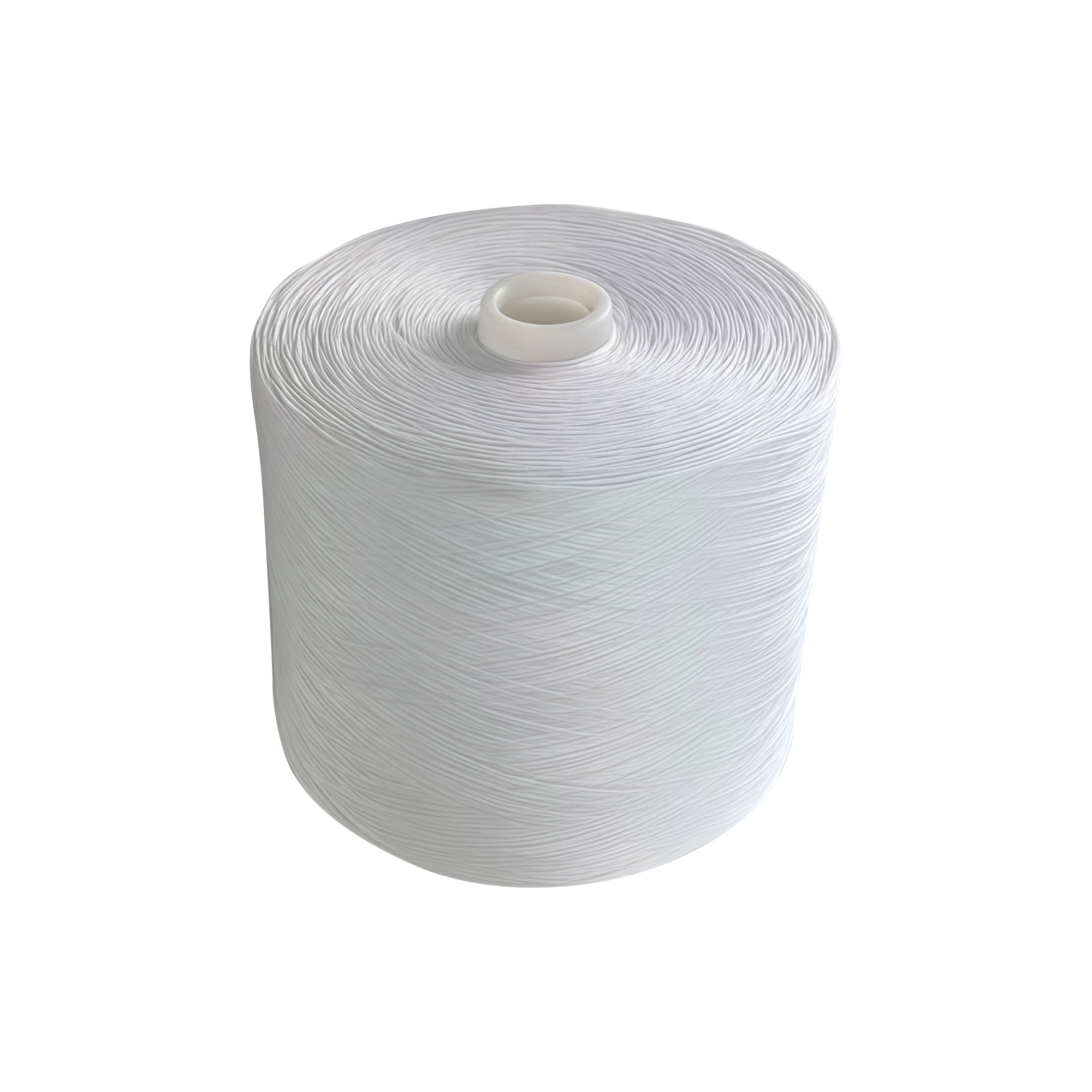
Why yarn construction matters before you specify a count
Polyester yarn is not a single material category. The same polymer can be converted into spun yarn, filament yarn, single yarn, or plied yarn, and each construction changes how the yarn behaves in twisting, weaving, knitting, and end-use loading. For technical buyers, the construction decision is as important as the count or tenacity specification, because it determines how the yarn will perform under tension, abrasion, and repeated flexing.
This guide focuses on 100% polyester staple-spun yarns, where short polyester fibers are twisted into a continuous strand. It explains the differences between single yarn, plied yarn, and spun yarn, how count and ply interact, and what to inspect before approving a bulk order.
Definitions: single yarn, plied yarn, and spun yarn
The terms overlap, so it helps to separate them by the question each one answers.
- Spun yarn describes the fiber format: staple fibers (short, discrete lengths) are twisted together to form a yarn. Spun yarn contrasts with filament yarn, where continuous filaments run the full length of the strand.
- Single yarn describes the strand count: one spun strand, usually designated with a "/1" suffix (for example, 20/1).
- Plied yarn describes a multi-strand assembly: two or more single yarns are twisted together. A two-ply yarn is written 20/2; a three-ply yarn is 20/3.
In practice, a plied polyester yarn is almost always made from spun single yarns, so "plied spun yarn" is redundant but common. The key distinction for buyers is whether the yarn you receive is a single strand or a folded assembly, because that changes strength, elongation, evenness, and handling behavior.
How ply changes mechanical behavior
Plying is not simply "more yarn." The second twisting operation folds two or more single yarns together, and the direction and amount of that twist affect how the final yarn responds to load.
Strength and elongation
A plied yarn generally has higher tensile strength than a single yarn of the same nominal count, because the load is shared across multiple strands and the plying twist helps equalize tension differences between them. Elongation at break can also change: plying typically reduces the variability in elongation between individual strands, which can make the yarn's behavior more predictable under dynamic loading.
However, the relationship is not linear. Over-twisting a plied yarn can reduce strength by over-stressing the fibers, and under-twisting can allow strands to separate or slip. The optimum twist level depends on the fiber, the count, and the end use, and it should be confirmed with test data rather than assumed.
Evenness and appearance
Plying can improve apparent evenness by averaging out the thick and thin places in the component single yarns. This matters for appearance-critical fabrics and for downstream processes that are sensitive to slubs or thin spots. A plied yarn may also produce a rounder, more uniform cross-section, which can affect cover and hand feel.
Abrasion and fatigue resistance
For applications involving repeated flexing or surface abrasion—such as tire cord, conveyor belting, or heavy-duty sewing—plied constructions are often preferred because the load distribution across strands reduces the stress on any single fiber. That said, the actual abrasion performance depends on fiber properties, twist, and any finishes applied, so it should be verified with application-specific testing.
Count and ply: reading the specification correctly
Yarn count is a measure of linear density. In the English cotton count system (Ne), a higher number means a finer yarn. The notation "20/1" means a single yarn of 20 Ne; "20/2" means two strands of 20 Ne single yarn plied together. The plied yarn's resultant count is not 20 Ne—it is approximately 10 Ne (because two strands of the same count combine to double the linear density).
This is a common source of confusion in purchase orders. If a buyer specifies "20/2" expecting a yarn with the same linear density as 20/1, the resulting fabric will be heavier and coarser than intended. Always confirm whether the quoted count refers to the single yarn before plying or the final plied yarn.
| Specification | Construction | Approximate resultant count (Ne) | Typical handling characteristics |
|---|---|---|---|
| 20/1 | Single spun yarn | 20 | Finer, lighter, more extensible; suitable for lightweight fabrics |
| 20/2 | Two-ply spun yarn | 10 | Heavier, stronger, more uniform; suitable for durable fabrics and industrial uses |
| 20/3 | Three-ply spun yarn | ~6.7 | Heaviest, highest strength; used where maximum durability is required |
Note: Resultant count is approximate and assumes no twist contraction or other process effects. Confirm actual linear density with the supplier's test report.
When to choose single yarn versus plied yarn
The choice depends on the performance requirements of the final product and the constraints of the downstream process.
Single yarn is often sufficient when:
- The fabric or product is lightweight and does not require high tensile strength.
- Softness and flexibility are more important than maximum durability.
- The downstream process can handle slightly lower evenness or higher elongation variability.
- Cost efficiency is a primary driver, since plying adds a processing step.
Plied yarn is preferred when:
- The end use involves high mechanical stress, such as tire cord, heavy-duty bags, or industrial sewing.
- Consistent strength and elongation are critical for process stability.
- The product requires a rounder, more uniform yarn for appearance or cover.
- You need to reduce the risk of thin spots or weak points that could cause failures in critical applications.
For many apparel and home textile applications, either construction can work, and the decision comes down to a trade-off between cost and performance margin. Requesting samples of both constructions and testing them under your actual processing conditions is the most reliable way to decide.
Inspection and verification: what to check before bulk approval
Technical buyers should verify construction and performance with objective measurements, not just visual inspection. The following checks are commonly used in the industry; the specific test methods and acceptance criteria should be agreed with the supplier and, where applicable, referenced to recognized standards.
- Linear density (count): Confirm the actual yarn count using a reel or skein method. Compare against the specified count and tolerance.
- Twist level and direction: Measure twists per meter (or per inch) and confirm the twist direction (S or Z) matches the specification. Twist affects strength, elongation, and fabric behavior.
- Tensile strength and elongation: Use a tensile testing machine to measure breaking strength and elongation at break. For plied yarns, check both the individual strands and the final assembly if needed.
- Evenness: Evaluate mass variation along the yarn using evenness testing or visual inspection against a standard. This is particularly important for appearance-critical fabrics.
- Ply integrity: For plied yarns, check that the strands are uniformly twisted and that there are no loose or missing plies. A simple untwist test can reveal ply separation issues.
- Foreign matter and contamination: Inspect for visible contamination, which can cause defects in downstream processing.
These checks should be performed on samples from the actual production lot, not just on a pre-production sample. If third-party inspection is required, agree on the sampling plan and test methods in advance.
Common failure modes and how to avoid them
Most yarn-related problems in production trace back to a mismatch between the specified construction and the actual demands of the process or end product. Some common issues:
- Ply separation: Occurs when the plying twist is too low or uneven. It can cause breaks in weaving or knitting and weak spots in the final product. Specify a minimum twist level and verify it on incoming lots.
- Count confusion: Ordering "20/2" when "20/1" was intended (or vice versa) leads to fabrics that are too heavy or too light. Always state the single yarn count and the number of plies explicitly, and confirm the resultant count.
- Over-twisting: Excessive twist can make the yarn lively, causing kinking and processing difficulties, and can reduce strength. Balance twist level against the required hand and performance.
- Elongation mismatch: If the yarn's elongation at break is not compatible with the downstream process (for example, high elongation in a process that requires low stretch), breaks or dimensional instability can result. Specify elongation limits based on your process capability.
Each of these failure modes can be mitigated by clear specifications, sample approval, and incoming inspection. The cost of testing is small compared to the cost of a failed production run.
Specifying polyester yarn for your application
When writing a purchase specification for polyester yarn, include the following information to avoid ambiguity:
- Fiber content: 100% polyester (or specify blend if applicable).
- Construction: single, two-ply, or three-ply.
- Count: state whether the count refers to the single yarn or the plied yarn, and give the resultant count if plied.
- Twist: direction (S/Z) and level (turns per meter or per inch), with tolerance.
- Tenacity and elongation: minimum breaking strength and elongation range, with test method.
- Evenness: acceptable mass variation or visual standard.
- Packaging: package type, weight, and winding format.
- Inspection: sampling plan, test methods, and acceptance criteria.
For critical applications, consider requesting a pre-production sample and running a pilot batch through your process before committing to bulk. This is especially important when changing from single to plied construction or when sourcing from a new supplier.
Limitations and scope
This guide addresses 100% polyester staple-spun yarns in single and plied constructions. It does not cover filament polyester yarns, which have different mechanical behavior and are specified differently. It also does not address specialized finishes, dyeing, or blending, which can affect performance and should be evaluated separately. The test methods mentioned are common industry practices; the specific standards and acceptance criteria should be agreed between buyer and supplier based on the end-use requirements.
Yarn performance is influenced by many factors beyond construction, including fiber properties, spinning parameters, and environmental conditions during processing. The information here is intended to support technical evaluation, not to replace application-specific testing.